The Influence of Manufacturing Precision on Roulette Wheel Behavior
Written by Elena Werner · Aug 31, 2026
The Influence of Manufacturing Precision on Roulette Wheel Behavior
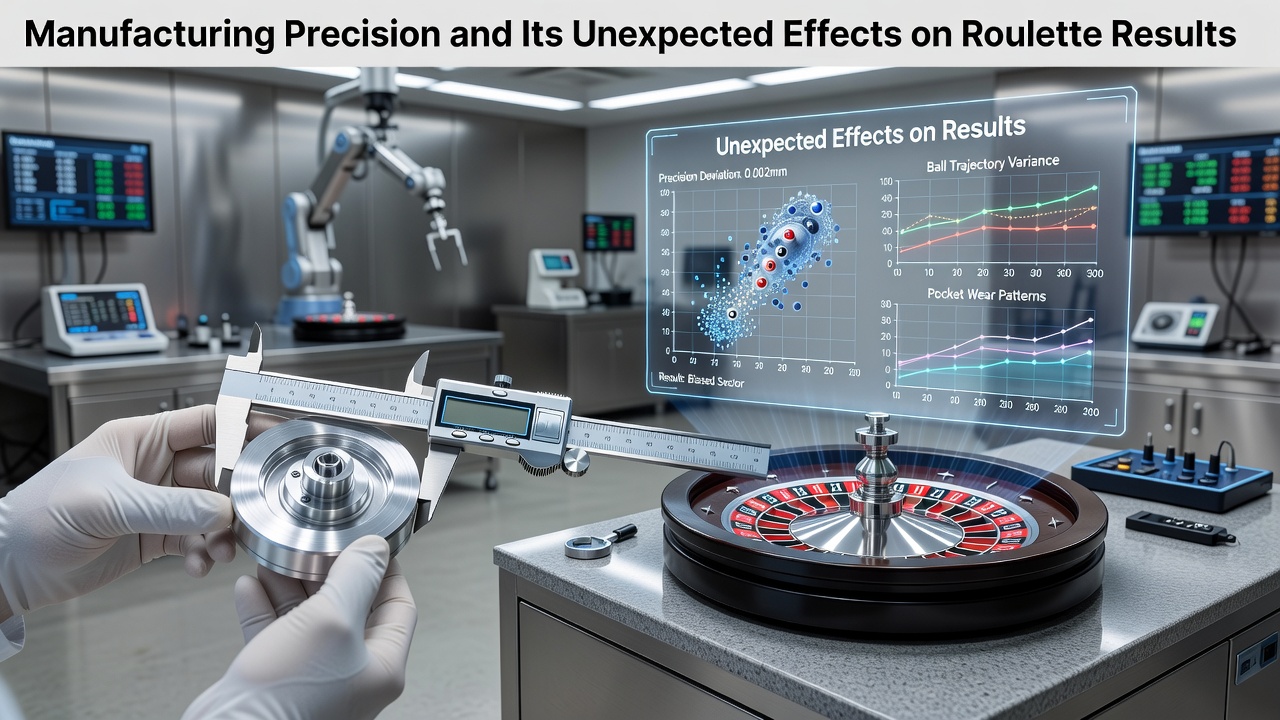
Manufacturing precision plays a central role in determining how roulette wheels perform over time, and data from engineering studies continue to reveal connections between production tolerances and outcome distributions that go beyond basic expectations. Wheels produced with tighter specifications on balance, surface smoothness, and component alignment tend to exhibit different wear patterns compared to those made with broader allowances, and researchers have tracked these differences across multiple casino installations since the early 2000s.
Modern wheel construction relies on computer-controlled milling and laser measurement systems that hold rotor and stator dimensions to within fractions of a millimeter. These standards emerged after earlier eras when hand-finished parts introduced larger variances that sometimes created detectable biases in ball behavior. Today facilities in Europe and North America apply coordinate measuring machines during assembly, and figures released by equipment suppliers show that post-2015 production runs achieve consistency levels previously unattainable with manual methods.
Key Production Variables and Their Measurable Effects
Ball track diameter, rotor pocket depth, and frets between numbers represent the main areas where small deviations accumulate. A track that sits even 0.2 millimeters off center can alter the point where the ball loses contact with the rim, and long-term observation by maintenance teams indicates that such offsets correlate with slight clustering in landing zones after thousands of spins. Pocket angles also matter because they influence how the ball settles once it drops; manufacturers now verify these angles with digital protractors calibrated against national metrology standards.
Material selection adds another layer. Aluminum rotors paired with phenolic ball tracks expand and contract at different rates when temperature shifts occur inside gaming rooms. Studies conducted by the Nevada Gaming Control Board have documented how seasonal humidity changes in desert casinos can widen or narrow these gaps enough to modify deceleration curves, though the effect remains small enough that regulatory thresholds still classify most wheels as fair.
Recent Data and Monitoring Practices
Casino operators began deploying automated spin-tracking cameras around 2018, and the resulting datasets allow statisticians to compare actual number distributions against theoretical probabilities on a per-wheel basis. One analysis covering wheels installed between 2022 and 2025 found that units manufactured under the strictest ISO 17025-accredited processes showed lower deviation scores than older stock still in service. These findings prompted several properties to accelerate replacement schedules rather than wait for visible wear.
In August 2026 the European Committee for Standardization plans to release updated guidelines for gaming equipment metrology that incorporate real-time sensor feedback during the final quality check. Early drafts suggest the new protocol will require suppliers to log vibration signatures for each completed rotor, creating a digital fingerprint that operators can reference during routine audits. Industry groups expect the change to reduce instances where microscopic imbalances only become apparent after months of continuous play.
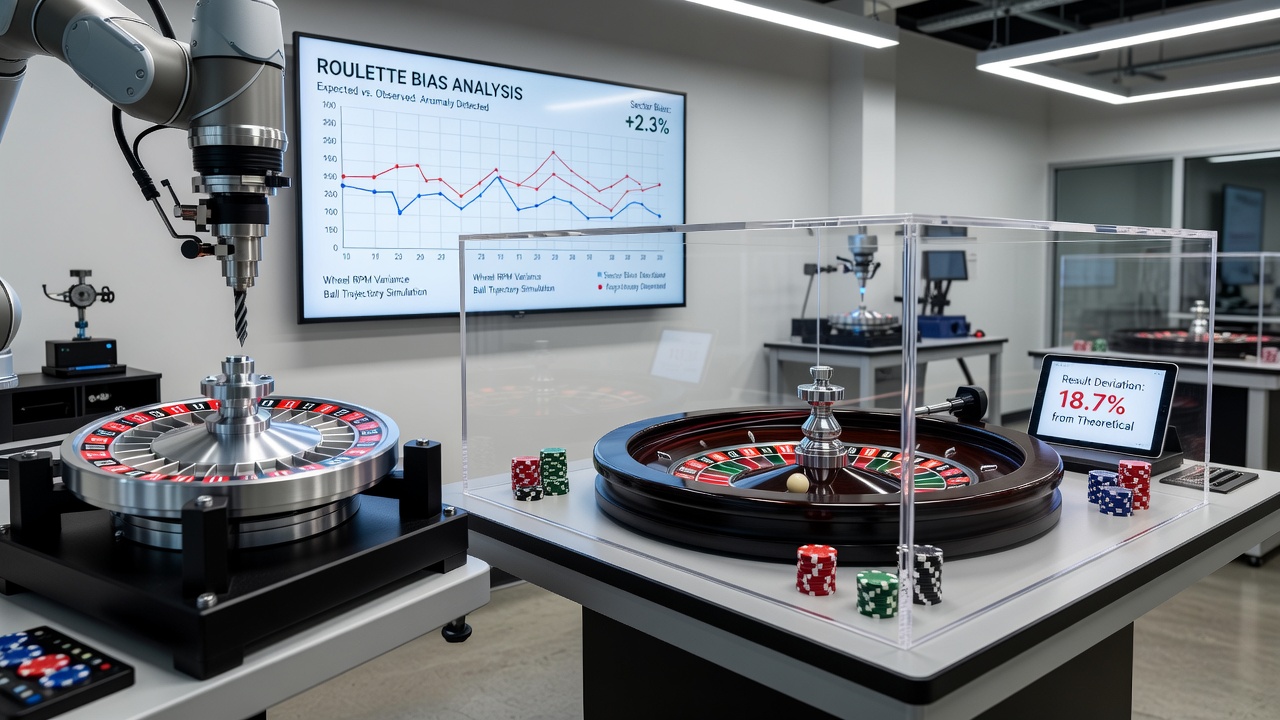
Maintenance crews now cross-reference these fingerprints against live performance logs, and several large operators report that the practice has helped identify wheels requiring earlier servicing. The approach also supports regulatory compliance because inspectors can request the original production data when investigating player complaints about unusual sequences.
Case Examples from Different Jurisdictions
One Australian venue replaced a set of wheels after internal tracking revealed a persistent bias toward a narrow sector on one unit. Subsequent examination traced the pattern to a slight ovality in the ball track that had developed during the curing process of the composite material. The supplier later adjusted its curing oven controls, and follow-up wheels from the same line showed no recurrence of the issue.
Similar observations surfaced at a Canadian property where winter heating cycles caused repeated expansion of metal frets. Technicians fitted the affected wheels with temperature-compensated inserts, and subsequent spin data returned to expected random patterns within weeks. These examples illustrate how manufacturing choices made at the factory level interact with site-specific environmental conditions long after installation.
Academic researchers have begun modeling these interactions using finite element analysis, and preliminary results presented at the 2025 International Conference on Gambling Studies suggest that future wheels could incorporate adaptive materials designed to maintain dimensional stability across wider temperature ranges. While still in the prototype stage, such developments would build directly on the precision manufacturing foundations already in place.
Conclusion
Manufacturing precision continues to shape roulette outcomes in ways that extend beyond initial design intent, and ongoing data collection from regulated markets provides clearer insight into these relationships each year. As measurement technologies and material science advance, the gap between theoretical randomness and observed results narrows further, yet the fundamental interplay between production tolerances and real-world variables remains a subject of active study across multiple jurisdictions.