Roulette's Mechanical Legacy in Contemporary Broadcast Formats
Written by Yves Washington · Aug 22, 2026
Roulette's Mechanical Legacy in Contemporary Broadcast Formats
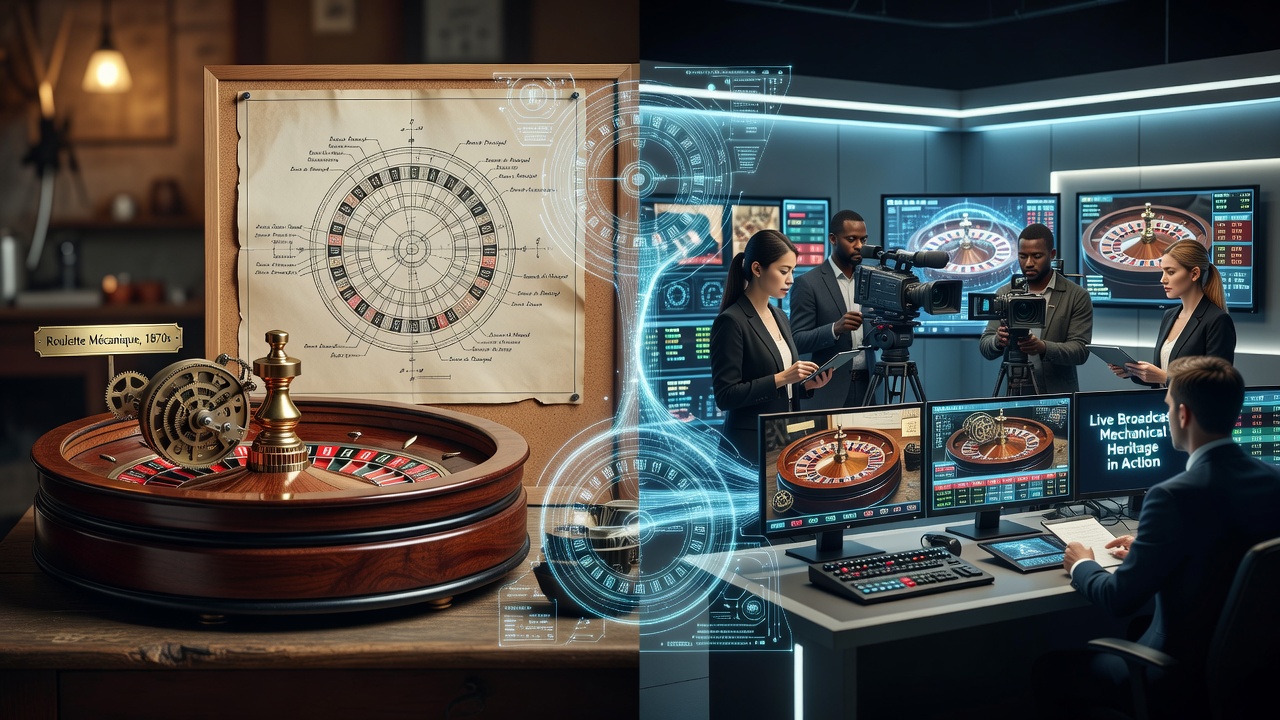
Roulette emerged in 18th-century France as a mechanical device combining a rotating wheel, a small ball, and precisely divided pockets numbered from zero to 36, with the wheel's design ensuring consistent physics-based outcomes during each spin. Observers note that the core components, including the frets separating pockets and the rotor's balanced construction, originated from earlier chance devices yet achieved refinement through iterative engineering by French inventors, and these same elements persist in modern broadcast productions where physical wheels operate under studio lighting and multiple camera angles.
Core Mechanical Elements and Their Design Principles
The wheel itself consists of a stationary bowl and a rotating disk, both crafted to minimize friction variations while maintaining random ball trajectories, and data from engineering analyses confirm that pocket dimensions and the slight tilt in the track influence ball deceleration patterns in predictable yet unpredictable ways. Manufacturers continue to produce these wheels using materials like wood for the bowl and metal for the rotor, with tolerances measured in fractions of millimeters, which ensures that broadcast operators can replicate the same tactile and visual feedback audiences expect from traditional casino settings. Researchers at technical institutions have documented how the ball's material, typically ivory or synthetic resin, interacts with the wheel's surface to produce the characteristic bounce before settling, and this interaction remains central to live transmissions that stream the entire sequence without digital intervention.
Transition to Broadcast Environments
Television and streaming platforms adapted these mechanical foundations by installing full-size wheels in controlled studios equipped with overhead and side-mounted cameras that capture every rotation and bounce in real time, and production teams synchronize audio feeds to transmit the distinctive clatter of the ball against the frets. Broadcasters in regions including North America and parts of Europe maintain dedicated facilities where dealers spin the wheel manually according to established protocols, preserving the absence of algorithmic generation that defines electronic variants. According to reports from the Nevada Gaming Control Board, physical roulette equipment in licensed broadcast operations undergoes regular calibration checks to uphold fairness standards identical to those applied in land-based venues, and this regulatory approach extends to Canadian provincial oversight bodies that require documented maintenance logs for all mechanical components used in televised formats.
What's interesting is how the visual rhythm of the spinning wheel translates across screens, with directors employing slow-motion replays and close-ups to highlight the ball's path in ways that emphasize the original mechanical randomness rather than obscure it. Studios often position multiple wheels side by side during multi-table broadcasts, allowing viewers to observe simultaneous spins that mirror the variety found in larger gaming floors, while technical crews adjust lighting to reduce glare on the polished surfaces and maintain clarity throughout extended sessions.

Technical Echoes in Modern Streaming Protocols
High-definition streams preserve the subtle vibrations and momentum shifts inherent to mechanical operation, and engineers integrate sensors that detect rotor speed without altering the wheel's movement, thereby providing data overlays that appear alongside the live footage. These overlays display historical spin frequencies drawn from the same physical device, connecting contemporary audiences to the statistical patterns first quantified in 19th-century probability studies. Industry analyses from the American Gaming Association indicate that viewer retention increases when broadcasts retain unedited mechanical sequences rather than substituting simulated graphics, and similar findings appear in research published by Australian academic groups examining interactive media formats.
Production standards now incorporate redundant mechanical backups so that any wheel malfunction triggers an immediate switch to a calibrated spare without interrupting transmission flow, and this practice echoes the redundancy built into early casino equipment maintenance routines. Operators in Asia-Pacific markets have adopted similar hybrid setups that blend physical wheels with global streaming platforms, ensuring that time-zone differences do not compromise the integrity of each spin's mechanical execution.
Regulatory and Operational Continuity
Gaming authorities across multiple jurisdictions mandate that broadcast roulette adhere to the same mechanical specifications applied to casino wheels, including pocket depth and wheel diameter, which prevents discrepancies between studio and floor experiences. European regulatory frameworks require independent testing laboratories to certify each wheel prior to its use in live transmissions, and these certifications cover both initial installation and periodic recalibration intervals. Such measures guarantee that the echoes of 18th-century engineering continue to shape viewer expectations and operational procedures well into the current decade.
Conclusion
The mechanical architecture of roulette, defined by its wheel, ball, and pocket system, continues to dictate the structure and presentation of broadcast formats through direct replication rather than replacement. Production teams, regulatory bodies, and technical specialists maintain these foundational elements across studios worldwide, ensuring that each transmitted spin reflects the same physical principles established centuries earlier while meeting contemporary standards for transparency and fairness.